Endangered Species: Mountain Gorilla
Mountain gorillas rebounded to about 1,000 but still face habitat loss, poaching, disease, and need constant protection.
Read Another Article


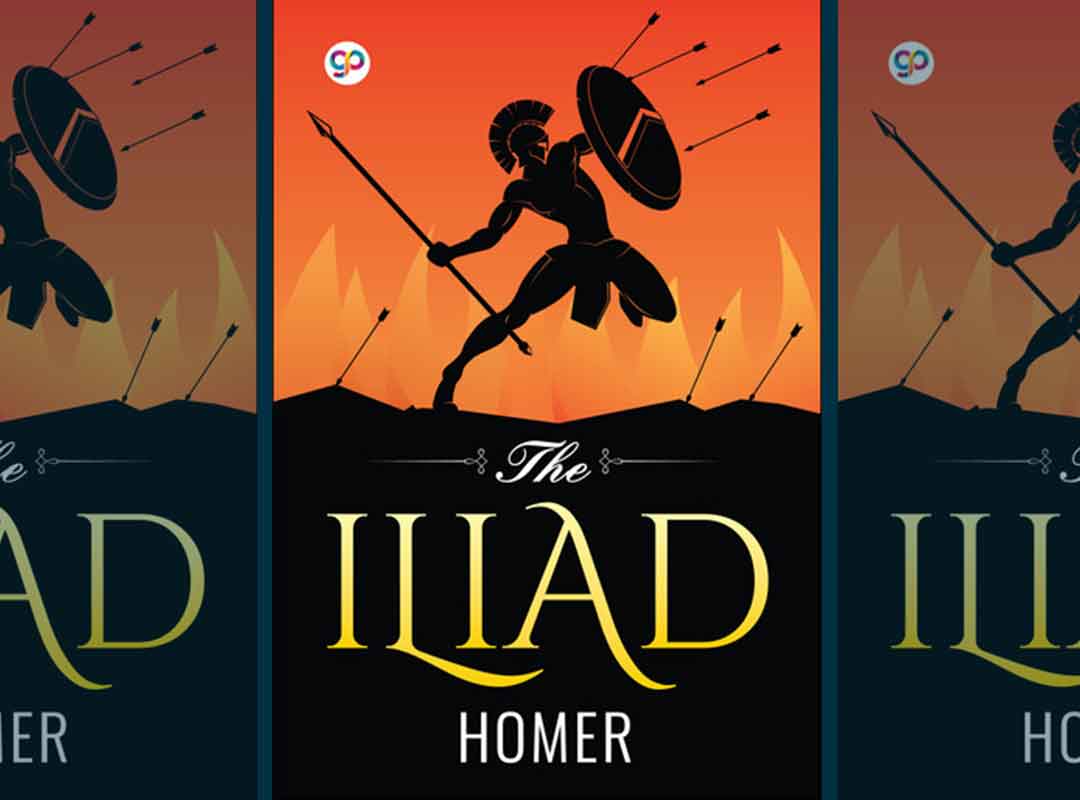


Jack Knoll, in his Newsweek article, “Monster Mash.” offers the following quote:
“Then his teeth flew out; from two sides, blood came to his eyes; the blood that from lips and nostrils he was spilling, openmouthed; death enveloped him in its black cloud."
Knoll then asks this question:
"Is this from the script for "The Texas Chain Saw Massacre"? "Friday the 13th, Part VIII"? No, it's from Homer's Iliad, which opened 3,000 years ago, performed to a preliterate audience by bards who were the ancestors of theater and film. The terror inspired in those ancient Ionians by such passages must have been something to see."
Horror has always been a part of humanity’s art culture. Homer used horror to describe war. Myths and legends use horror to accentuate the battle between good and evil. Alfred Hitchcock used psychological horror rather than visual horror to frighten audiences. In modern cinema, the bloodier the scenes, the better. Evil characters are mutations and the more mutated, the better. At the library, horror movies are the most checked-out DVDs.
Why do people like horror?
Paul Santill explains:
”What is monstrous about art‐horror... is not simply the evil of violent murders, which we find aplenty in gangster films and westerns, but the fact that the dead do not quite pass away, continuing to exist in a grotesque and perverse way as an unburied corpse, an undead zombie, or a cannibalized body. And this death of death applies as well to the death of the killer‐monster. Even when it is finally "killed off" by the end of the film, the horror genre usually teases us with the possibility that it may come back, that such beings can never really be extinguished. The dead do not stay dead.”
Horror is horror because it deals with things “for which there are no standard means of judgement or response” (Santill). Horror is the unknown, the thing under the bed or in the closet. It’s the pattern that you think you see in the swirling night fog, the noise that you can't explain. Or maybe you see the claws scrabbling out of the soil, smell the stench of evil, hear the screams of victims but you can't explain it. It paralyzes your muscles, freezes your scream, washes your skin in cold sweat, and when the creature claws its way out of the ground, you don't know what it is, except that you have to run, run, RUN!!
Or maybe all you see is a shadow against a wall, a body falling to the floor, an upraised arm gripping a blunt instrument; just the barest suggestion of horror and still it makes your eyes bulge. You don't have to run. Its okay to stay where you are. You're watching it on TV, reading it in a book, maybe
listening to an audiobook. Its not real. "But they all offer the pleasures of vicarious terror; of being safely scared" (Knoll).
Horror is an adrenaline rush without the danger, a thrill without the chase, a peep into the unknown without putting oneself in harm's way. It’s Halloween night, knowing that all those creepy creatures are just people dressed up in costume.
Or are they?
This article was written using the following sources accessed from the Inspire link on the library's homepage:
Santilli, Paul. “Culture, Evil, and Horror.” American Journal of Economics & Sociology, vol. 66, no. 1, Jan. 2007, pp. 173–93. EBSCOhost, https://doi.org/10.1111/j.1536-7150.2007.00503.x.
Kroll, Jack. “Monster Mash.” Newsweek, vol. 131, no. 25, June 1998, p. 78. EBSCOhost, research.ebsco.com/plink/be1f736c-5c4b-382d-99c8-d56bce8d5159.
INSPIRE (Indiana Spectrum of Information Resources) is supported by the Indiana General Assembly and the Institute of Museum and Library Services under the provisions of the Library Services and Technology Act. The most common meaning of INSPIRE is Indiana’s "Lifelong Learning Library". Launched in 1998 by the Indiana State Library, it is a massive collection of vetted, high-quality academic databases, research tools, and educational resources.
Mountain gorillas rebounded to about 1,000 but still face habitat loss, poaching, disease, and need constant protection.

Library life never stands still, but friendly staff and constant change keep the community thriving together.

Knox County celebrates Black history through education, remembrance, music, and community events.