Notes from a New Staff Member
Library life never stands still, but friendly staff and constant change keep the community thriving together.
Read Another Article


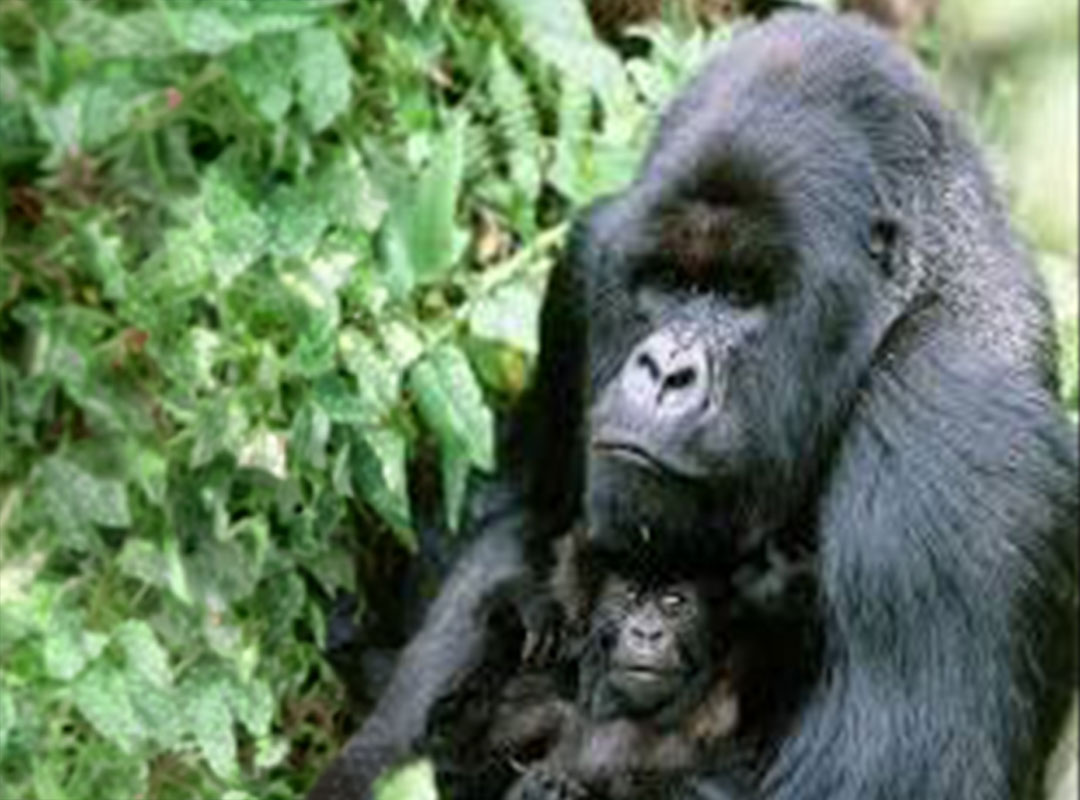


The mountain gorilla (gorilla beringei, beringei) is one of the two subspecies of the eastern gorilla. It is listed as endangered by the IUCN (International Union for Conservation of Nature). The IUCN is composed of both government and civil society organizations that use the experience, resources and knowledge of more than 1,600 member organizations with input of some 19,000 experts making it the accepted global authority of the status of the natural world and measures the need to safeguard it. The IUCN is widely considered the global gold standard and trusted authority on the conservation status of species.
The IUCN creates and manages the ICUN Red list of threatened species which has become the world’s leading inventory of the extinction risk of all known biological species. In the 1980s the Red List listed the mountain gorilla as critically endangered as there were fewer than 00 of them in the world and due to some major conservation success was reclassified to endangered when their numbers increased to around 1,000 in 2019. There is still major work to be done today to ensure that they do not return to “critically endangered” status.
Today there are still no mountain gorillas in captivity, but there are two national parks where they are protected. One group is found in Virunga Massif, a range of dormant volcanoes bordering the Democratic Republic of Congo, Rwanda, and Uganda. Another group is Bwindi Impenetrable Forest; a protected area located in southwestern Uganda which slightly extends into the Sarambwe Nature Reserve in Congo. Although there has been some conservation success the mountain gorilla still suffers from limited habitat, disease, snares, human pressure, climate change and regional insecurity which means they remain dependent on continuous protection. Unlike their lowland gorilla cousins, they can’t survive life in captivity or in areas of lower altitude. They are not found in zoos because the attempts to accommodate their specific needs could not be met. They suffered from extreme stress, rapid disease, and fatal digestive failure when removed from their high-altitude home.
The fur of the mountain gorilla is thicker and longer than that of the other gorilla species which enables them to live in colder temperatures. They are identified by nose prints unique to everyone. The males reach standing heights of 5. 3 to 5. 6 feet with a body thickness of 4.5 to 5.3 feet and an arm span of 6.6 to 8.9 feet, and weight of 265 to 421 pounds. They are smaller than the eastern lowland gorilla. Adult males have a more pronounced bony decorative plumes on the top and back of their skull giving their heads wide, sloping sides, and a narrow point at the top. These anchor the powerful muscle attached to the lower jaw and increase chewing ability. Adult females also have these but are less pronounced. Like all gorillas, they feature dark brown eyes framed by a black ring around the iris. Adult males are called silverbacks because of the patch of gray hair that develops on their backs as they mature. Hair on their backs is shorter than on most other body parts with hair on their arms much longer.
The mountain gorilla is mainly on the ground using all four limbs to walk and run. They sometimes climb into fruit trees if branches are strong enough to carry their weight. Like all great apes, their arms are longer than their legs. They move by “knuckle walking” supporting its weight on backs of their curved fingers rather than their palms. They are most active in the day, spending it looking for food and consuming it, resting during late morning and resuming their foraging again during afternoon hours, and resting at night. Each gorilla builds a nest from surrounding vegetations to construct their bed, building a new one each night. Only infant gorillas sleep in the same nest as their mothers. At sunrise they leave their nests to begin another day. If it is colder than usual with an overcast, they have been known to stay in their nests a bit longer.
Habitat loss has been and remains one of the most severe threats to the mountain gorilla population. With ongoing wars that have broken out in the regions near the forest areas earlier dominated by gorillas and other species there have been more human settlements that have resulted in deforestation confining the gorillas to isolated deserts. Some groups of gorillas have from time-to-time raided crops of some farms for food, creating animosity and retaliation from the settlers.
Bush meat of wild animals hunted in tropical and subtropical regions, primarily in Africa, Asia, and South America for human consumption includes monkeys, apes, antelopes, pangolins, snakes, crocodiles and on occasion elephants. Although not usually hunted for bush meat, the gorillas frequently are maimed or killed by traps and snares intended for other animals, however they have been killed for their heads, hands and feet which are sold to collectors. Infants have been sold to people who want them for pets.
Gorillas are particularly susceptible to animal trafficking for the illegal pet trade. With young gorillas worth from $1,000 to $5000 on the black market, poachers seeking infant and juvenile specimens may kill and would another member of the group in the process. Poaching for meat is also threatening in regions where there is political unrest.
As gorillas are increasing from one another geographically due to increased human settlements, the genetic diversity of each group is becoming reduced. Signs of inbreeding have been already appearing in younger gorillas such as webbed hands and feet. The gorillas who have been able to live in protected areas are able to avoid this problem. Gorillas have very few babies over a lifetime due to their slow reproduction rates meaning populations take decades to recover from losses. Despite the protection they have from living in national parks, the mountain gorilla is also at risk from even well-meaning people. Visits by tourists and locals can transport human diseases to the gorilla who is DNA quite close to human and human pathogens as well as deadly viruses.
There is much more work to be done to assure that this beautiful species continues to grow in number so that they may someday join the IUCN Red list as (LC) or least concerned and leaving the place of “ENDANGERED”.

Library life never stands still, but friendly staff and constant change keep the community thriving together.

Knox County celebrates Black history through education, remembrance, music, and community events.

Craig Fehrman’s book offers a broader, humanized history of Lewis and Clark’s expedition.